Redefining Sustainability: The Value, The Strategy & The ιmpact

Powered by Wordpress

Katerina Vlassopoulou, Impact Hub, Καραϊσκάκη 28, Αθήνα 105 54, email: k.k.vlassopoulou@gmail.com, +30 694 5064 093,

Pictures under the licence of Pixabay.com

 The conversation around sustainability is too often framed by fear—fear of failure, cost, and organizational risk. And understandably so: sustainability, whether in research, practice, or policy, is a dynamic and ever-evolving field.

Still, leading universities and research centers agree on one thing: the economic model of the future is sustainability. Once embedded, it becomes a driver of growth, progress, and market leadership.

Sustainable management—grounded in the rational use of resources—fuels development, builds trust, and strengthens resilience in an unstable environment shaped by the climate crisis.

Sustainability is not a luxury, nor a threat. It is a strategic opportunity.

With interdisciplinary thinking, project management expertise, ESG knowledge, and climate communication skills, we can transform uncertainty into a compass for change.

And the “how” is clear: by drawing on the latest data and strategies from leading universities and labs, we can create value, visibility, and lasting trust with our audiences.

Because in the end, sustainability isn’t just about adapting to the future—it’s about leading it.

What’s Happening with ESG in Europe—and Why It Matters to All of Us

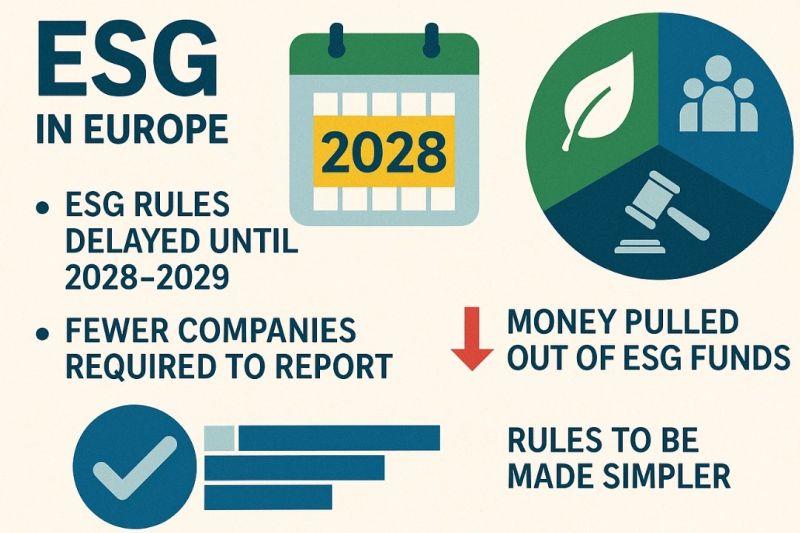
The European Union has decided to delay some big ESG rules for companies until 2028–2029. These rules were meant to make companies report clearly on how they treat the planet, people, and how responsibly they’re run.

At first, this delay might sound like a break for businesses. But it’s not really a win. It’s more like a sign that the system wasn’t ready yet. So now we all face a choice:
Do we wait for rules to force change, or do we choose to act responsibly, even without them?

Some big takeaways:

-Fewer companies will now be required to report on ESG—for now.

-Investors are starting to pull money out of ESG funds for the first time. Not because they don’t care—but because they want more serious action, not just words.

-The EU is working to make the rules simpler—but also more trustworthy.

Here’s the big idea:

Delaying the rules doesn’t mean we can delay the work. Climate change, social injustice, and bad governance don’t wait. If we want businesses to do better, they need clear values—and action that starts now.

You don’t need to be an expert to care about ESG.
You just need to ask: Are companies making the world better—or only making money?